
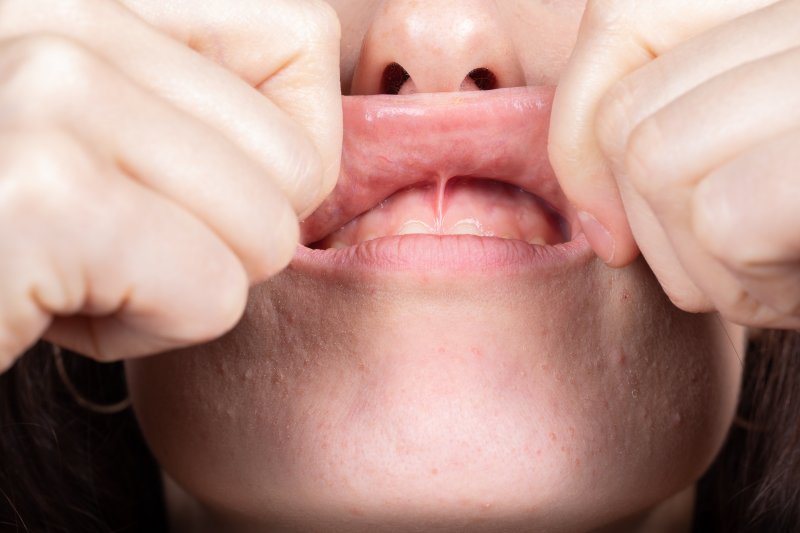
Lip and tongue-ties are common among infants and young children, as symptoms usually become evident during this time. However, issues related to these banded tissues may not reveal themselves until you are much older. If you struggle to swallow solid foods, breathe through your mouth, or have difficulty speaking clearly, discover how a frenectomy might be the answer if you have a lip or tongue-tie as an adult.
What Lip and Tongue-Tie Symptoms Occur Among Adults?
The most common symptoms that you can expect as an adult with a lip or tongue-tie include:
- Difficulty with speech and pronouncing certain syllables or words
- Difficulty sleeping, often breathing with your mouth open or snoring, and suffering from sleep apnea
- Difficulty chewing certain foods and being able to swallow effectively
- Painful chewing and eating
- TMJ dysfunction that causes jaw pain
- Teeth grinding and clenching
- Increased headaches or migraines because of muscle strain
- Worsening oral health problems (i.e., gum disease)
- Increased risk of tooth loss
Why Aren’t Lip and Tongue-Ties Treated Sooner?
Not all issues related to lip and tongue-ties develop during infancy or childhood. If they do, some children adapt to the challenges they face while eating, breathing, and speaking.
However, as you transition from adolescence to adulthood, your speech, eating habits, sleep patterns, and oral movements change and can become more complex. This is when symptoms can become more evident, requiring you to re-evaluate whether treatment is necessary.
Consider this: without professional intervention, your struggles and quality of life will worsen. Sleep apnea, TMJ dysfunction, tooth loss, and overall well-being will develop and create problems that affect more than just your oral health.
What Kind of Treatment is Available?
To address your adult lip or tongue-tie, a dentist skilled in this area can perform a frenectomy. This procedure involves releasing the banded tissue located behind your upper lip or underneath your tongue.
The process is quick and comfortable thanks to the dental laser used. Instead of relying on scalpels and sutures, your dentist will move the concentrated beam of light along the tissue to release it and cauterize it. This will result in less bleeding, minimal swelling, and a reduced risk of infection.
Your recovery time will be shorter as well, allowing you to resume regular activity much sooner than if your dentist used a scalpel and sutures.
It’s never too late to do something about a lip or tongue-tie; all that is required is to schedule an appointment with your dentist. Soon enough, you’ll enjoy greater oral movement than ever before.
About the Author
Dr. Amar Singh is a lip and tongue-tie specialist with more than a decade of experience. Working with patients of all ages, he can provide frenectomies to older individuals who have been struggling with various symptoms for years or even decades. Visit our website or call (215) 874-3787 to discuss the process of lip and tongue-tie treatment.